Red onion and vinegar do something most lunch plates never do: they strip away the heavy, sleepy crash that hits your body after eating. That bright, sharp bite isn’t just flavor — it’s a metabolic nudge aimed straight at the afternoon slump, the brain fog, and that dead-eyed feeling that shows up after a “normal” meal.
One minute you’re answering messages, folding laundry, or staring at a spreadsheet. The next, your eyelids feel like wet sandbags and your focus leaks out of your head.
That’s not a character flaw. It’s what happens when your meals keep hammering your system with spikes, sludge, and too much digestive drag while your cells sit there starving for a clean, steady fuel flow.
The food industry loves complicated fixes. A jar of red onion and vinegar is the kind of simple answer that doesn’t sell supplements, subscriptions, or glossy promises.
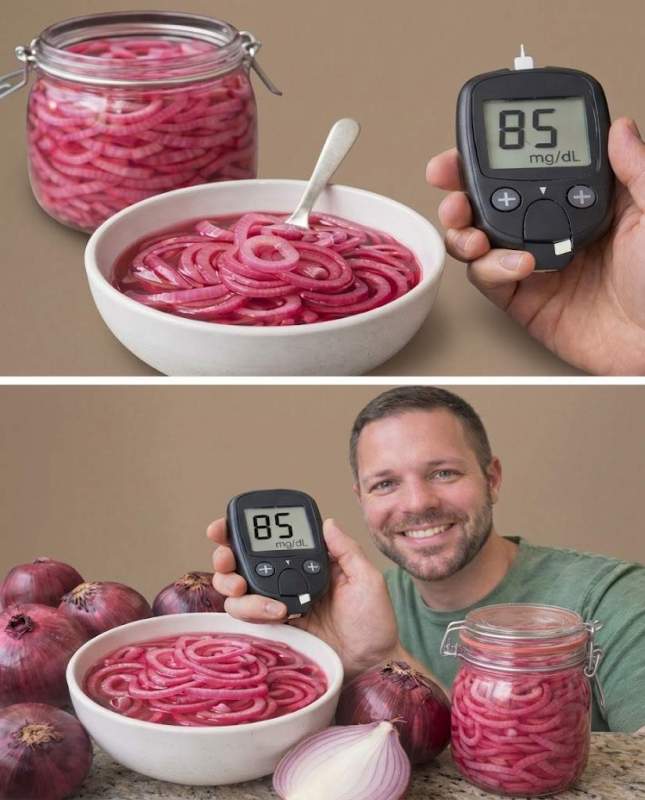
Why the crash hits so hard
When a meal lands like a brick, your body scrambles to manage the surge. The result is a kind of internal traffic jam — blood sugar swings, sluggish circulation, and a nervous system that feels like it just got unplugged.
Think of your metabolism like a city with one main bridge. A heavy, sugary, over-processed meal sends too many cars onto it at once, and everything backs up. Red onion and vinegar act like the traffic controller nobody invited, forcing the flow to slow down before the pileup starts.
That’s why people notice the shift in the most annoying place of all: the hours after lunch. The desk doesn’t suddenly feel like a punishment, the couch doesn’t start calling your name, and your head stays clearer instead of sinking into that syrupy, half-awake fog.
And here’s the ugly truth: when that crash becomes routine, you start blaming yourself. You think you’re lazy, aging badly, or “just not built like you used to be.”
The real problem is that too many plates are loaded with foods that hit like a hammer, while the body is begging for something that slows the blow and cleans up the mess.
The hidden mechanism inside that pink jar

Red onion brings quercetin, one of those rust-stripping compounds that helps your body deal with oxidative stress. Vinegar brings acetic acid, which changes how aggressively your system responds after a meal.
Together, they work like a brake pad and a cleanup crew. One keeps the surge from slamming through your system, and the other helps clear the smoke that follows a rough meal.
Think of your digestion like a sink with greasy water rushing down the drain. If the pipe is already narrow, every rich meal leaves more gunk behind. The onion-vinegar combo doesn’t magically rebuild the pipe, but it does make the flow less violent, less sticky, and far easier for your body to handle.
The first thing people notice is that meals stop feeling so punishing. The heavy, post-lunch drop gets quieter, and the whole day stops turning into a series of energy rescues.
The supplement industry would go bankrupt if people knew what was sitting in the produce aisle.
That’s why this old kitchen staple keeps getting rediscovered. It doesn’t wear a lab coat, and it doesn’t need a billboard. It just shows up on your plate and starts changing the chemistry of the meal in front of it.
Why the body feels different when it starts working with you
When the brine gets into the routine, the body stops taking such a beating from every bite. You’re not dragging yourself through the afternoon like you’ve been sandbagged from the inside.
That changes the feel of the day in small but brutal ways. You don’t stare at the clock waiting for permission to collapse. You don’t wander into the kitchen hunting for sugar just to revive a system that should never have crashed in the first place.
For women juggling work, family, and a body that feels less predictable than it used to, that steadier rhythm is everything. It’s the difference between finishing the day with a little fuel left and hitting the wall before dinner is even on the stove.
For men who feel the afternoon drop as a sudden loss of drive, the shift is just as obvious. The body feels less bogged down, less flattened, less like it got wrapped in wet towels after lunch.
Think of it like swapping a clogged air filter for a clean one. The engine doesn’t become a different machine — it just stops gasping for breath every time you ask it to do basic work.
And because red onions also bring prebiotic fiber, you’re feeding the forgotten second brain in your belly while you eat. That means the gut gets a better environment to work in, instead of being buried under a pile of greasy, sugar-soaked leftovers.
The 10-minute jar that changes the plate

Slice red onions thin, cover them with a hot vinegar brine, and let the jar do the slow work. The sharpness softens, the color deepens, and the whole thing turns into a bright, tangy tool you can drop onto eggs, bowls, wraps, roasted meat, or even plain vegetables.
That’s the beauty of it: no dramatic overhaul, no expensive regimen, no complicated ritual. Just a small, acidic weapon that cuts through the meal before the meal gets a chance to flatten you.
Over time, the pattern gets clearer. The same lunch no longer feels like a trap. The same afternoon no longer feels like a fight against gravity.
Wall Street doesn’t build empires around vegetables.
That’s exactly why this stays under the radar. It’s cheap, ordinary, and sitting in the same aisle as a thousand things designed to keep you dependent on the next fix.
Why the after-picture matters
Picture dinner without that familiar heaviness hanging over you. You’re still present. Still sharp. Still able to think past the next snack and into the rest of your evening.
The shift doesn’t feel like a fireworks show. It feels like getting your own body back from a system that’s been quietly draining it for years.
That’s the real power of red onion and vinegar: they don’t just add flavor. They change the terms of the meal.
P.S. One common kitchen move wrecks the whole effect before it even starts: dumping in sugar to “balance” the brine. That turns a sharp, metabolism-friendly jar into a sweet trap that drags the same crash right back onto your plate. Keep the brine clean, and the next thing to watch is the one mineral that makes the whole process feel even stronger.
This article is for informational purposes only and does not replace professional medical advice. Please consult your healthcare provider for personalized guidance.