If you clicked this, you already saw the claim: papaya seeds can help with detox, weight loss, fatty liver, metabolism, and even that sluggish, heavy feeling that creeps in after 60. That’s a bold promise for something most people scrape into the trash without a second thought.
And if your mornings feel like you’re dragging a sandbag through your own body, if your belly won’t flatten no matter how “good” you try to be, if your liver numbers keep getting mentioned in the same worried tone, you’re in the right place.
Because the real issue is not willpower. It’s the way your internal filters get jammed with the daily sludge of modern eating, stress, and age-related slowdown.
And here is the part that sounds medically impossible: papaya seeds don’t work like a magic fat burner. They trigger a different kind of reset — one that starts in the forgotten machinery of your digestion and spills outward into the liver, the waistline, and the way energy moves through your day.

The part nobody talks about
Most people think papaya seeds are just bitter little leftovers. That’s a mistake.
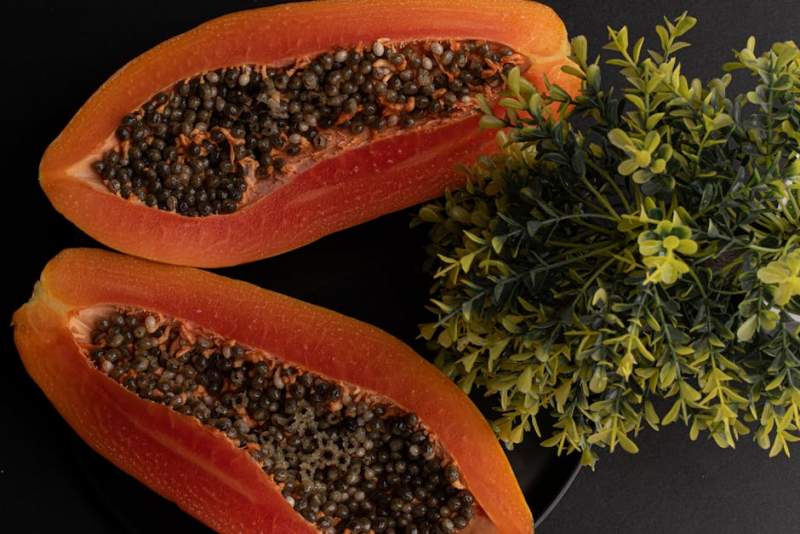
Inside those black seeds are sludge-clearing compounds, fiber, enzymes, and plant chemicals that act like a tiny cleanup crew moving through a clogged system. Think of your liver like a furnace filter coated in greasy soot — when it’s packed tight, the whole house feels stale, heavy, and overheated.
Papaya seeds bring a kind of internal organ flush. Not a fake cleanse, not a trendy gimmick — a biological nudge that helps your body handle the mess it’s already carrying.
Imagine this: you finish dinner and instead of that brick-in-the-stomach feeling, your digestion keeps moving. Your belly doesn’t balloon like a tire pumped too full. Your body stops acting like every meal is a hostage situation.
The reason is simple. Papaya seeds contain papain, an enzyme that helps break down protein, plus rough fiber that behaves like a stiff brush scraping residue out of the digestive tract. That’s not “gentle.” That’s mechanical.
And that matters, because when digestion stalls, the whole system backs up. Food sits too long. Pressure builds. The liver gets burdened. The body starts hoarding water, energy drops, and the scale becomes a liar with a straight face.
The $100-billion wellness machine barely whispers about it. There’s no patent hiding inside a fruit seed you can scoop out with a spoon, dry, and grind at home. That’s exactly why the cheap fix gets ignored.
Why the belly feels lighter first
The first thing people notice is not some dramatic movie-scene transformation. It’s quieter, but more real: less bloating, less post-meal heaviness, less of that trapped, swollen feeling that makes jeans feel two sizes too honest.
Think of your gut like a traffic jam at rush hour. When the lanes are blocked, everything behind it starts honking. Papaya seeds help loosen the jam so things can move again.
Imagine this: you eat lunch and don’t spend the rest of the afternoon unbuttoning your waistband under the desk. You stand up without feeling like your midsection is inflated with wet cement. That’s not a fantasy — that’s what happens when the digestive bottleneck starts to open.
And because papaya seeds carry rust-stripping agents in the form of antioxidants, they help push back against the wear-and-tear that piles up in aging tissue. The body doesn’t need more noise. It needs less friction.
Over time, the pattern gets clearer: when your gut isn’t fighting every meal, your appetite settles, your cravings stop screaming, and your body stops acting like it has to store everything for a famine that never comes.
Why the liver feels the shift next
But it gets even weirder: the liver is often the second place people feel the difference, because it is the body’s chemical sorting room. When that room is packed with greasy boxes and broken machinery, nothing gets processed cleanly.
Papaya seeds are being studied for compounds that help the liver handle everyday oxidative stress and metabolic overload. In plain English, they help the liver stop drowning in its own workload.
Imagine a warehouse with one broken conveyor belt and stacks of boxes leaning into the aisles. That’s a sluggish liver. Now imagine a few workers show up, clear the floor, and get the belt moving again. That’s the kind of internal shift people are chasing when they talk about “detox.”
And here’s the ugly contrast: when the liver is overloaded, fat handling gets sloppy. The body becomes more willing to stash fuel where you don’t want it — around the middle, under the chin, and in the places that make the mirror feel rude.
Imagine this: you wake up with less puffiness, your waist doesn’t feel like it’s holding a secret, and your energy no longer crashes like a bad power grid by midafternoon. That’s what a less-burdened liver can feel like from the inside out.
Why weight loss becomes less of a battle
Now here’s where most people make a devastating mistake: they chase weight loss with starvation, chaos, and random “fat-burning” products while ignoring the one thing that controls hunger, digestion, and metabolic output — the body’s internal flow.
Papaya seeds help create a steadier feeling of fullness because fiber slows the emptying of the stomach and keeps the second brain in your belly from sending panic signals every hour. That means fewer false alarms, fewer snack attacks, less scavenger-hunt behavior in the kitchen.
Think of it like putting a governor on a wildly revving engine. Without it, the machine burns fuel badly and jerks all over the road. With it, the ride smooths out.
Imagine this: you sit down to breakfast and actually stay satisfied long enough to get through the morning without raiding the pantry. You stop negotiating with cravings every afternoon. You stop feeling like your body is a broken vending machine.
And because papaya seeds support the digestive process, the body wastes less energy fighting backup and more energy doing what it’s supposed to do: move, burn, and reset.
That’s why people notice the shift in a different order. First the belly calms. Then the cravings quiet down. Then the whole system feels less sticky.
The mistake that ruins the whole thing
The mistake is taking too much, too fast, or using them the wrong way. A wrecking-ball dose does not make the body cooperate; it makes the gut revolt.
Start small, keep it consistent, and use them as part of food, not as some desperate punishment ritual. When people overdo the dose, they blame the seed instead of the stupidity of the approach.
And I didn’t even get into what happens when you pair papaya seeds with the one mineral so many people over 60 are silently running low on…
This article is for informational purposes only and does not replace professional medical advice. Please consult your healthcare provider for personalized guidance.