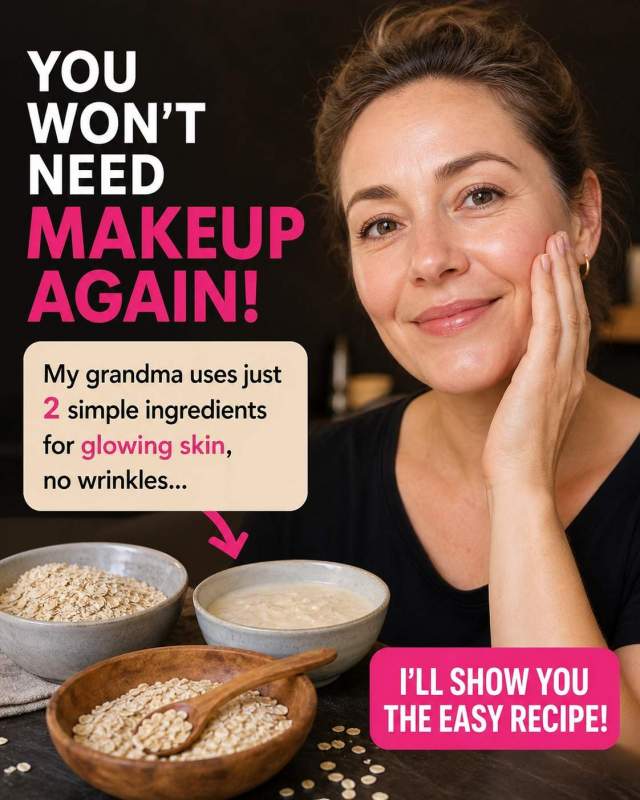
Rice and milk are the two pantry staples behind that “why does her skin look lit from within?” effect. The post is promising a face that looks smoother, brighter, and far less dependent on makeup — especially for women tired of dullness, dryness, and the creased, tired look that settles in as skin matures.
That matters because the real problem is not just wrinkles. It’s the rough, dry surface that catches foundation, turns powder into dust, and makes every mirror glance feel like a tiny ambush.
And the machine selling you $80 jars loves that panic. It thrives on convincing you that your face needs more complexity, more acids, more “actives,” more steps — when the skin often just needs raw biological fuel and a full system scrub from the outside in.
What happens next is less about beauty and more about biology.
The Quiet Reset Hiding in a Bowl
Think of mature skin like a painted wall that’s been hit with years of steam, grime, and sun. The surface isn’t broken — it’s coated.
Rice flour brings a soft, starch-rich veil that helps lift away that dead, chalky buildup without sandpapering the face raw. Milk adds lactic acid, a natural surface loosener that starts breaking the crust so fresh skin can show through.
That’s why the face looks different after the rinse: not “made up,” but unburdened.
The first thing people notice is that foundation stops grabbing every dry patch like Velcro. Cheeks look less flat, the nose doesn’t flash that dusty texture under light, and the whole face reads as smoother instead of coated.
It’s the difference between polishing a fogged-up mirror and smearing more product across the glass.
Why Women Notice It in a Different Way
For women dealing with dry, maturing skin, the win is not just softness. It’s the way the face stops looking tired by noon.
When the top layer is overloaded with dead cells, moisture can’t move properly and makeup sits on top like powder on cracked earth. Rice and milk help clear that debris so the skin can hold a cleaner, more even finish.
By the time you’re washing up after breakfast, the face already feels less tight. By midday, there’s less of that papery pull around the cheeks and less temptation to keep layering on cover-up just to feel presentable.
Wall Street doesn’t build empires around pantry ingredients, and that’s exactly why this gets ignored. You can’t slap a logo on a bowl of rice and milk and charge a luxury markup for it.
The ugly truth is simple: the cheapest fix gets the least airtime.
Why the Mix Changes the Surface, Not Just the Feel
The mechanism here is a kind of skin-level filtration. Rice acts like a fine mesh sieve, while milk behaves like the liquid that loosens what’s trapped in it.
Without that pairing, dead cells pile up like dust in a vent. With it, the surface gets a cleaner pass, and light reflects more evenly instead of scattering off rough patches.
That’s why the glow looks so different in the morning mirror. Not greasy. Not shiny. Just clearer, like the skin finally got a chance to breathe through a clogged filter.
After a few uses, the pattern gets more obvious: makeup glides instead of dragging, blush sits more naturally, and the face stops looking like it has to fight for every ounce of brightness.
Most expensive creams try to cover the mess. This mix starts by clearing the stage.
The Bowl That Does the Work

You don’t need a laboratory setup. You need a small bowl, fine rice flour, and milk stirred into a paste that holds together instead of running.
That short resting pause matters because it lets the starches swell and bind, turning the mixture from loose grit into something that clings and works across the skin instead of slipping off it.
Use it on clean skin, and the face gets that post-rinse feeling people chase with expensive masks: lighter, softer, less armored.
For skin that has been living under a layer of dullness, that change feels almost unfair. One morning you look in the mirror and the face doesn’t seem older — it seems less burdened.
The Second Shift: Makeup Stops Running the Show
This is where the emotional payoff hits. The mirror stops demanding rescue.
Instead of reaching for thicker foundation to hide rough texture, you start seeing your own skin again — the tone, the natural sheen, the softer edges around the cheeks. It’s like switching from a floodlight to candlelight: the whole face looks warmer and more alive.
That matters because confidence is not built in the makeup aisle. It starts when the skin underneath stops feeling like a problem to solve.
And no, the beauty industry does not love that idea. A simple pantry routine threatens the entire expensive ritual of buying more, layering more, and hoping more product will finally fix what buildup keeps hiding.
P.S.
One common habit kills the whole effect before it starts: using the paste too thick and scrubbing like you’re sanding a floor. That turns a smoothing ritual into abrasion, and mature skin pays for it fast.
Keep the texture creamy, let it sit long enough to bind, and use the lightest touch on the rinse. The next piece that changes everything is the liquid you leave behind — and what it does to the skin when you use it the right way.
This article is for informational purposes only and does not replace professional medical advice. Please consult your healthcare provider for personalized guidance.